Black Oil on Unstable Ground Sumner 
Just a few miles away from Portland, Ore., sits 350 million gallons of liquid fuel stored in over 600 aging tanks in a region called the Critical Energy Infrastructure hub. This hub was engineered long before experts knew that this region has a 37% chance of being hit with a magnitude 9.0 earthquake within the next 50 years caused by a massive fault line called the Cascadia Subduction Zone. As the CEI hub currently stands, if this quake occurs, it could release up to 193 million gallons of oil into the Willamette River and surrounding communities. 
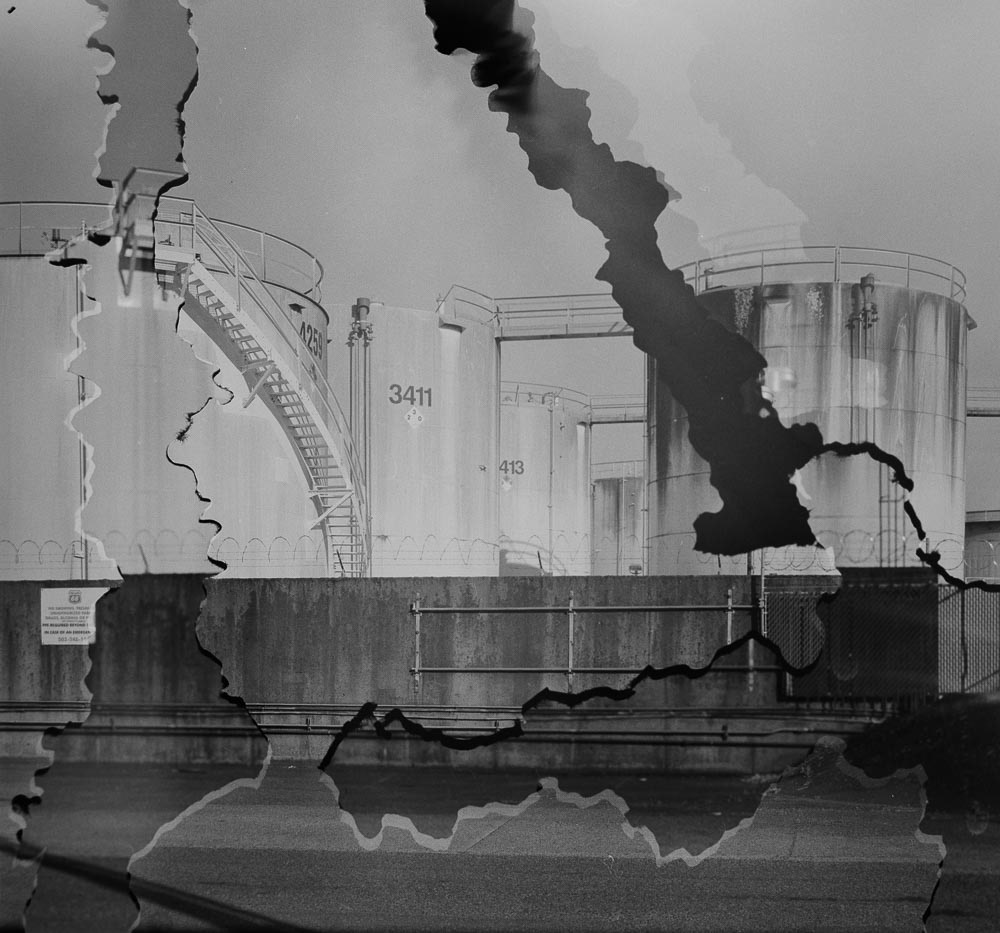
This image was taken in camera using controlled double exposures on 4x5 film and without the use of post-process digital manipulation.
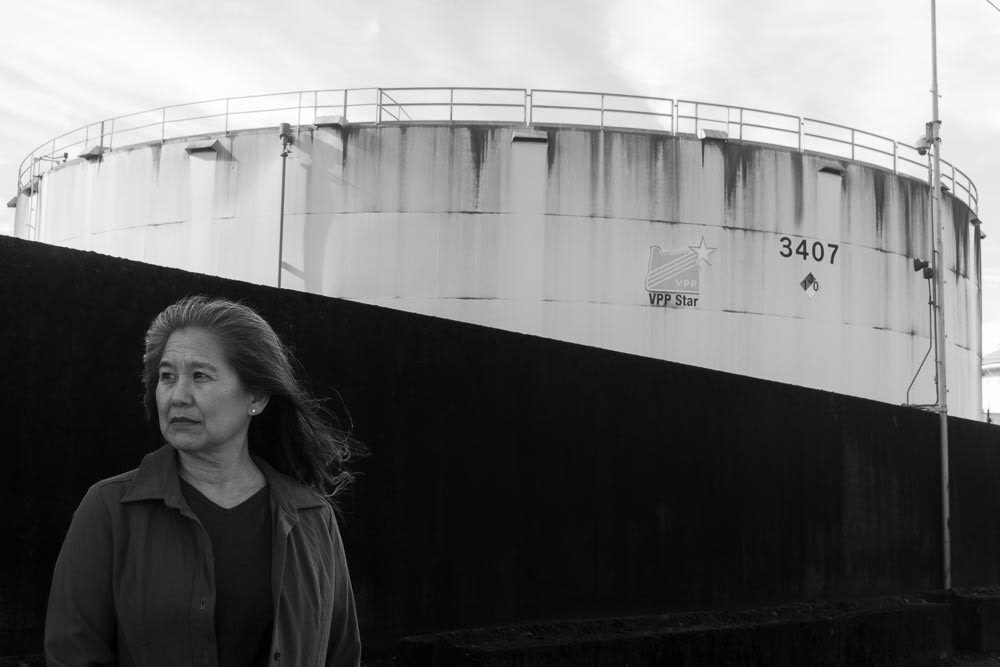
Yumei Wang stands in front of fuel tanks at the CEI hub. Wang was the first researcher to discover the soils sitting underneath the hub are extremely susceptible to liquefaction — a process in which normally solid land loses its strength when shaking occurs. She is the leading expert in this field and has published further reports and continued to advocate for action to make the hub seismically secure.
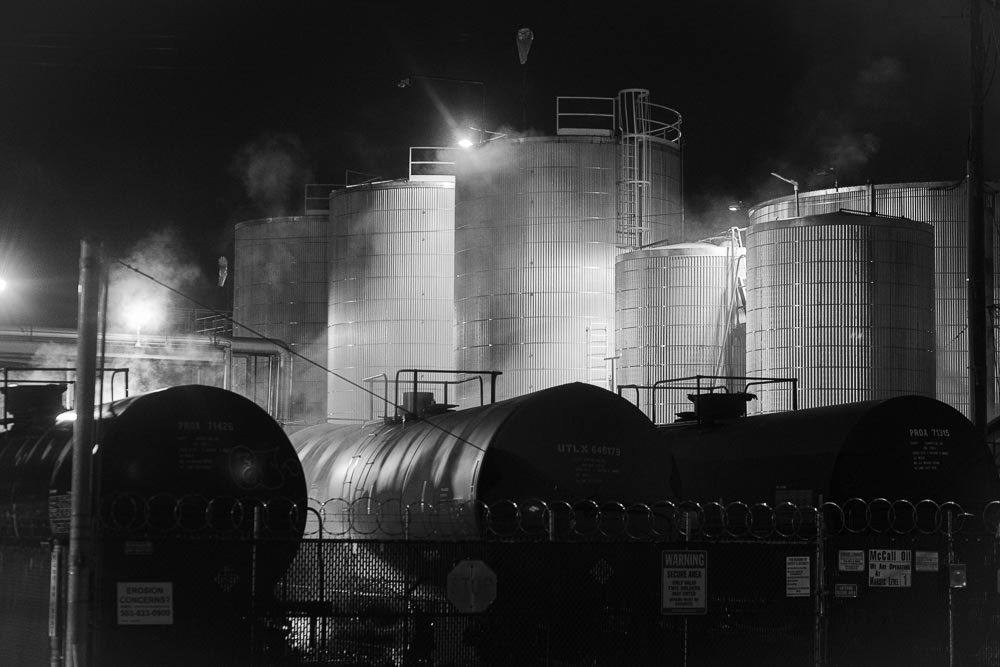
​The shaking and liquefaction during a magnitude-9.0 earthquake would be powerful enough at the CEI hub to topple tanks, crush pipelines, and spill fuels and chemicals into local waterways and surrounding communities.
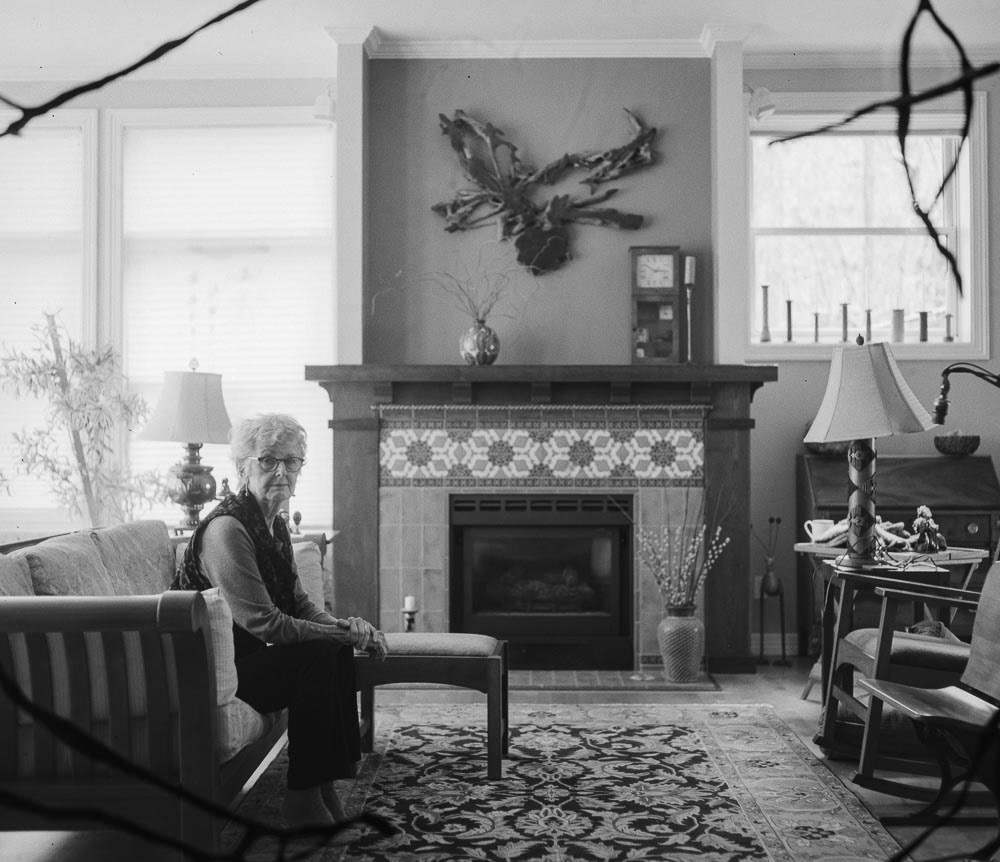
Nancy Hiser poses for a portrait in her home. Hiser lives less than a mile away from the CEI hub in a small community called Linnton. Lintonn residents, living just next to the CEI hub surrounded by forest land, are at the most direct risk if a catastrophe occurs at the hub. Hiser has spent the last decade advocating for federal, state and city officials to ensure these tanks don't topple, spill and catch fire during a major earthquake.
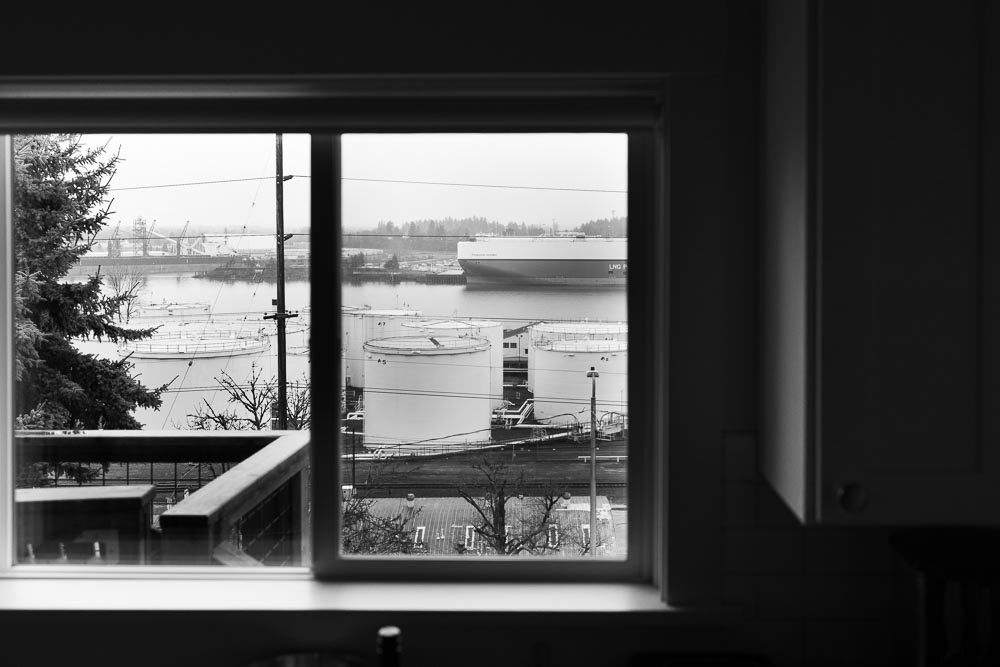
Tanks in the CEI hub sit just over the road seen from Justine Aylmer's home in Lintonn. When Aylmer purchased her home, like many others in the Linnton neighborhood, she was unaware of the risk of a major catastrophe at the CEI hub. "It's necessary infrastructure, but it shouldn't be here," Aylmer said.
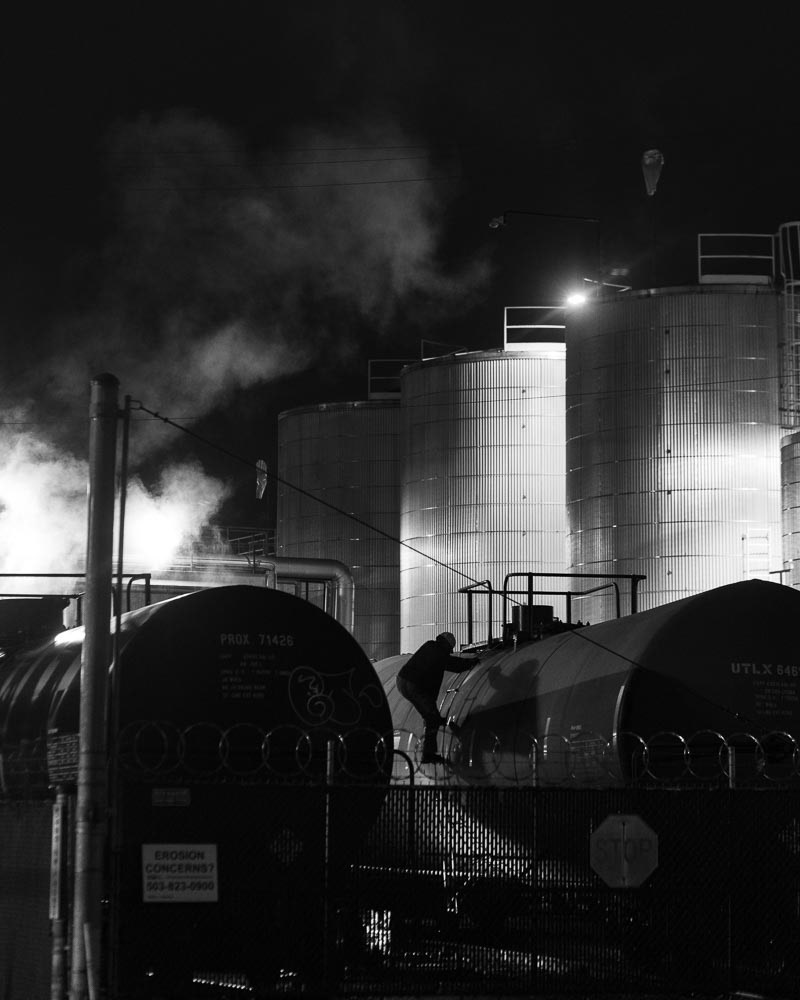
If fuels did spill, ​they are likely to spark petrochemical fires, create clouds of dangerous fumes, and immediately strip Oregon of 90% of its liquid fuel supply at a time when containment and suppression may not be possible.
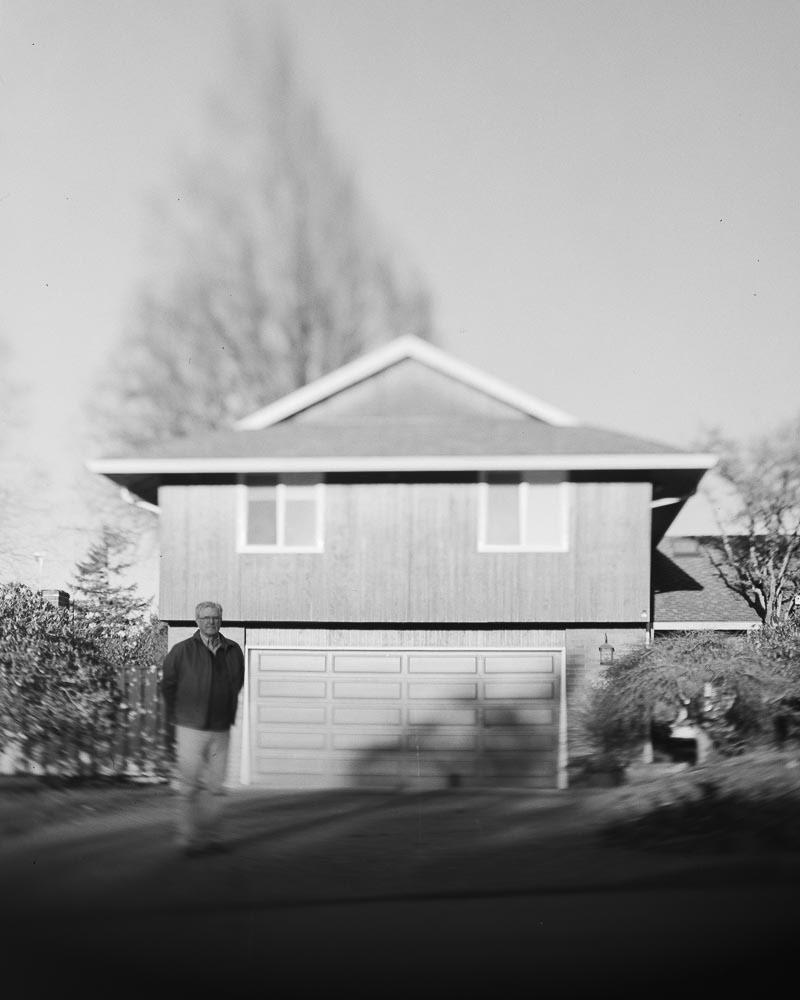
Mike Kortenhoff stands in front of his home in SouthWest Portland. Kortenhoff, now retired, worked for Oregon's Department of Environmental Quality for 34 years working on petroleum spill management and storage safety. In the final years of his career, Kortenhoff worked with policymakers, researchers, hub operators and community activists to learn how to prepare for 'The Big One' at the CEI hub. "The science is crystal clear about the risks and the likelihood." Kortenhoff said. "What we don't know is when the earthquake's going to occur … But the catastrophe is so daunting that great urgency is appropriate on our part."
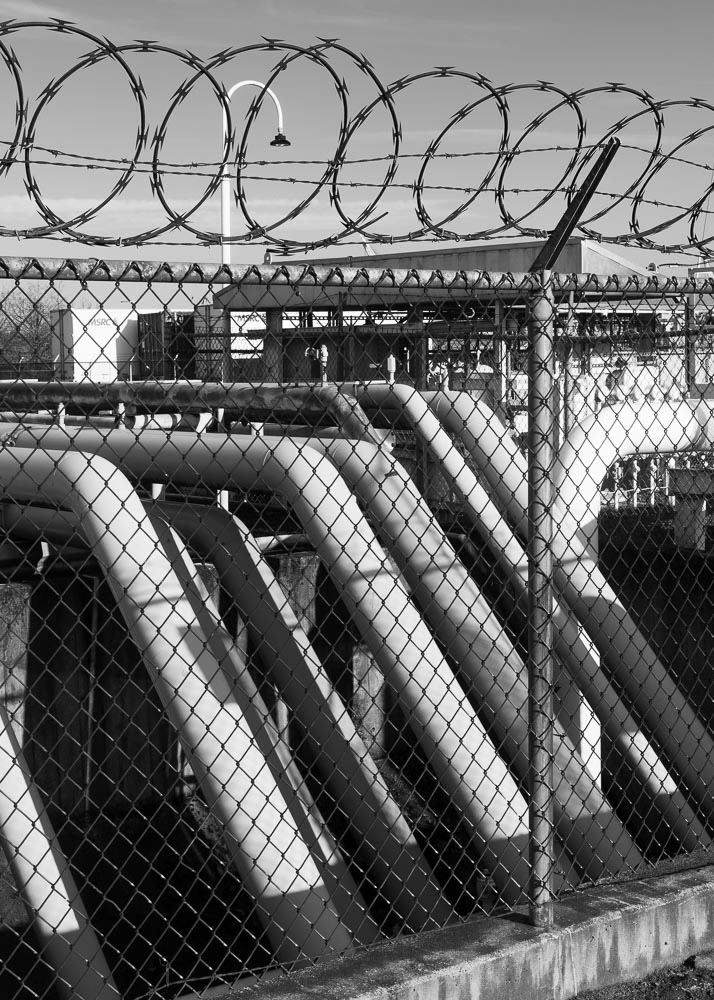
The Olympic pipeline spans 400 miles through Washington and Oregon and carries hundreds of thousands of barrels of fuel each day. Like the fuel tanks at the CEI hub, the pipeline and surrounding transloading facilities are not seismically sound. Even if the tanks at the CEI hub were seismically retrofitted, the hundreds of miles of pipeline feeding the hub are likely to fail and cause massive leaks during an earthquake event.
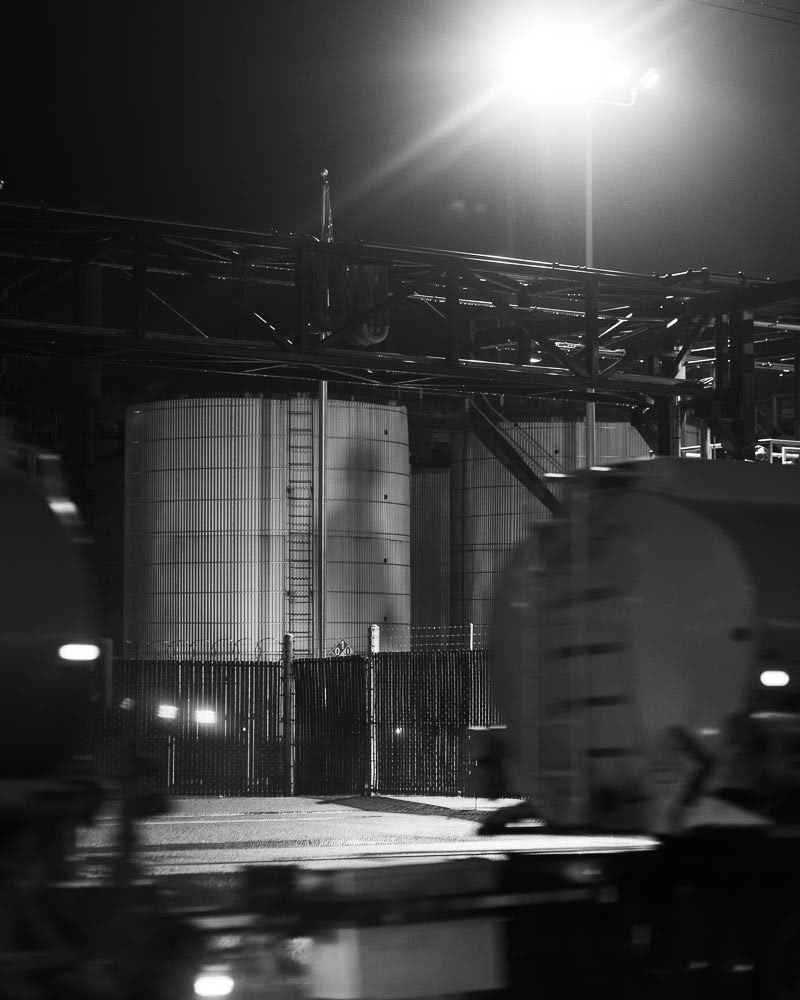
A terminal operator climbs down a rail tank car at the CEI hub. The CEI hub holds and moves 90% of Oregon's fuel. If it fails during an earthquake event, that necessary fuel to power emergency response efforts across the state would be inaccessible.
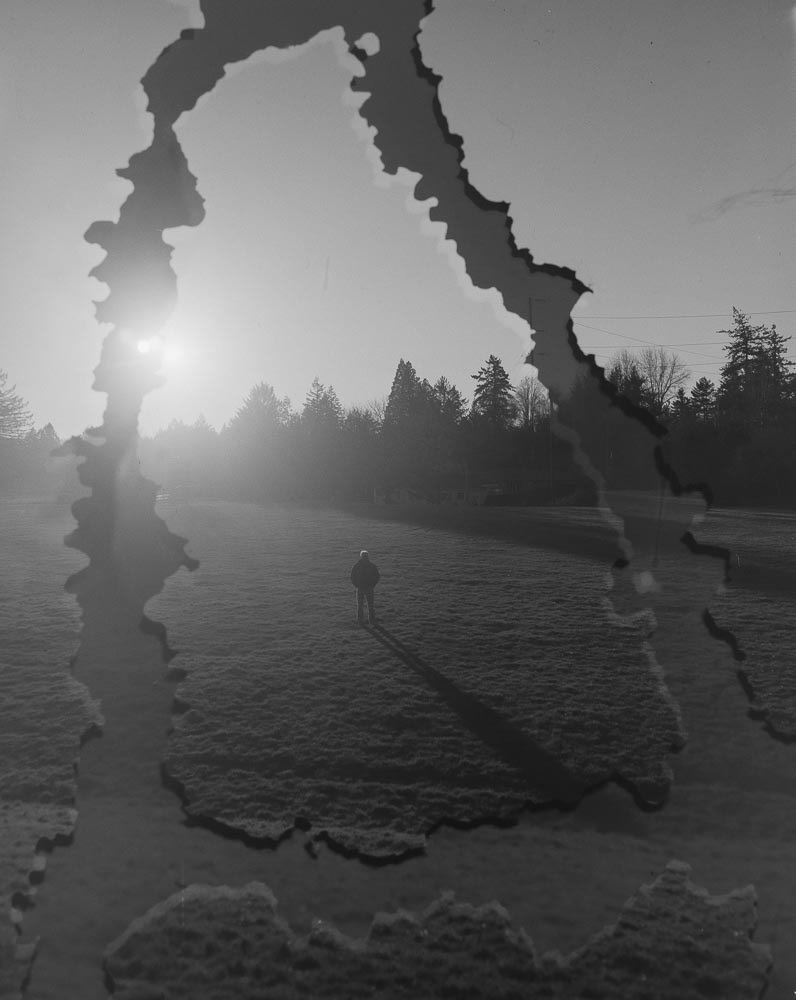
Mike Kortenhoff stands at Bridlemile school where a 2020 US geological survey revealed a fault line called the Sylvan-Oatfield fault lies just beneath. Many fault lines like this span across the Portland metro area, but none pose as much of a threat as the Cascadia Subduction Zone. This image was taken in camera using controlled double exposures on 4x5 film without the use of post-process digital manipulation.
Back to Top